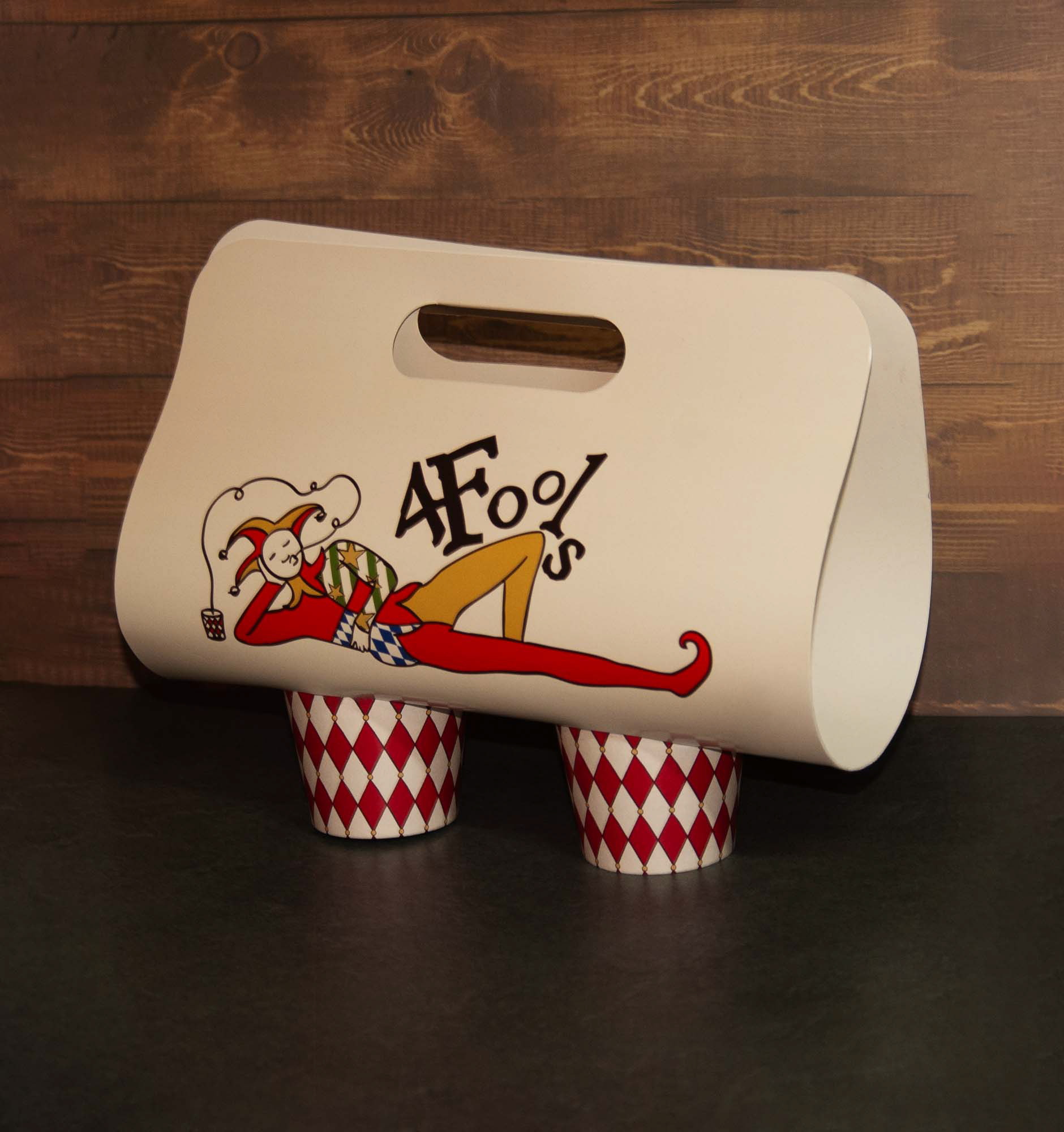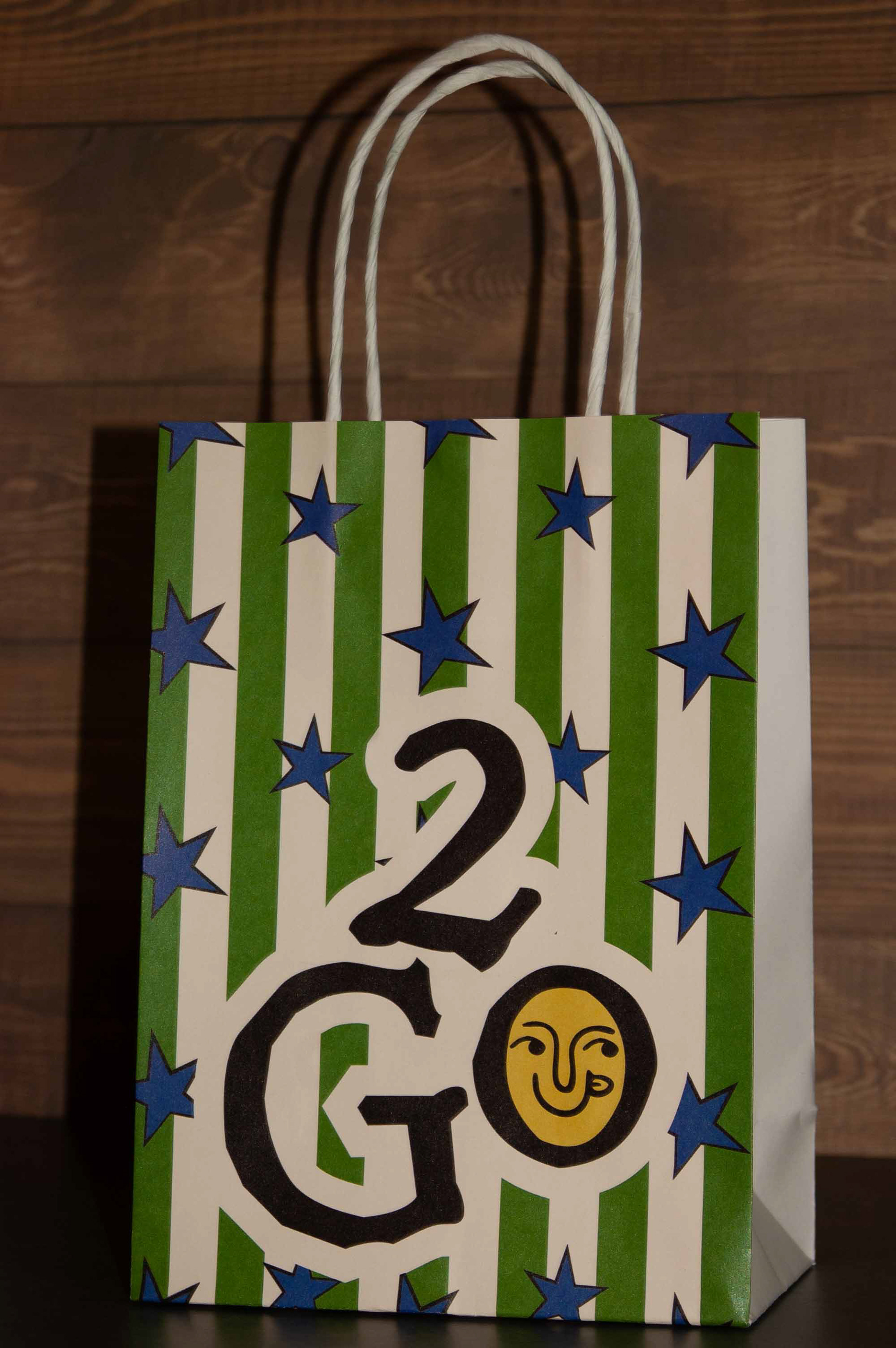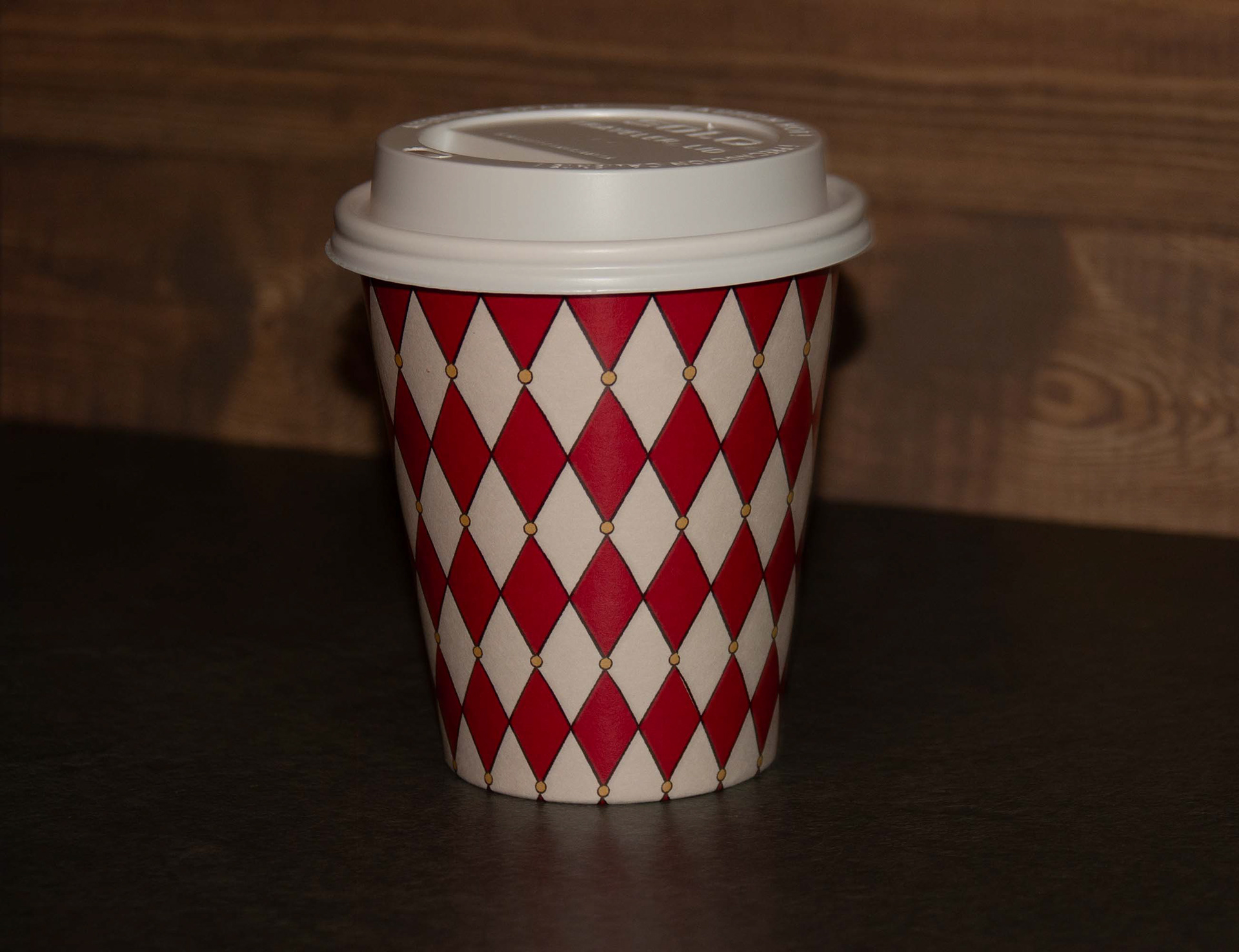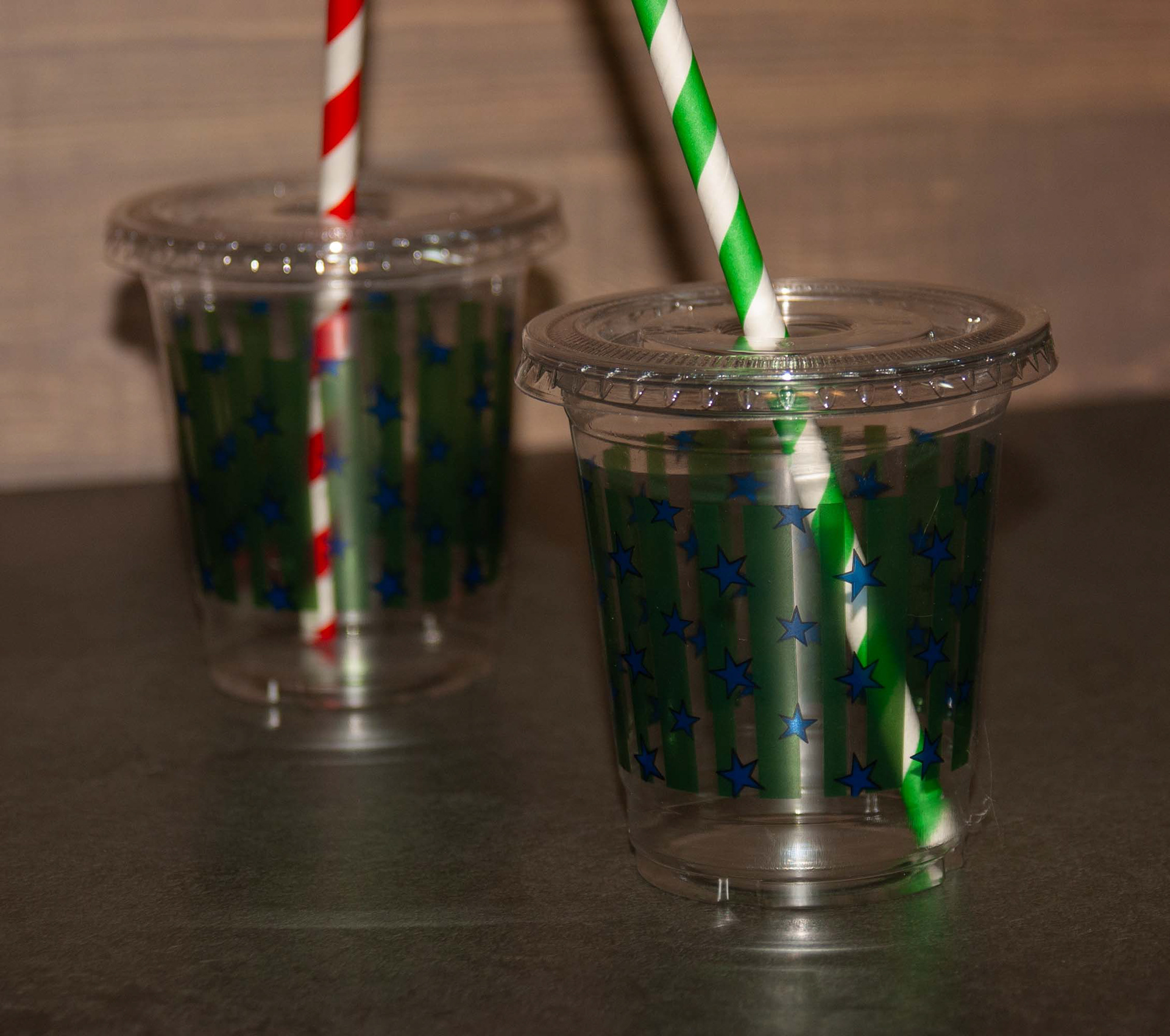
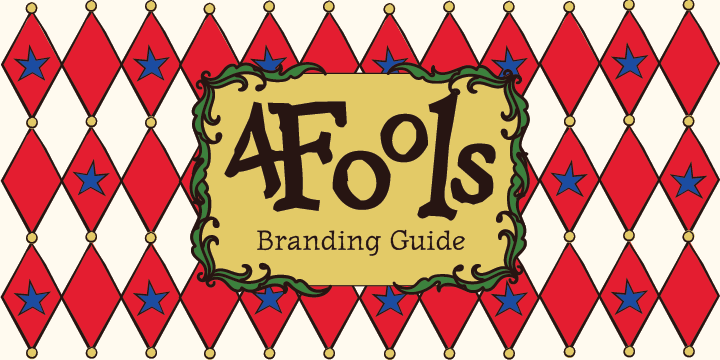
For my final project at St. Edward's University, I chose to create a brand identity for a hypothetical cafe and bakery called "4Fools". The inspiration for the brand was jesters and the Renaissance Faire. For this project, I pushed myself as a designer to incorporate modularity for variation while maintaining consistency.
The visual inspiration for 4Fools is jesters, the Renaissance Faire, and illuminated texts.
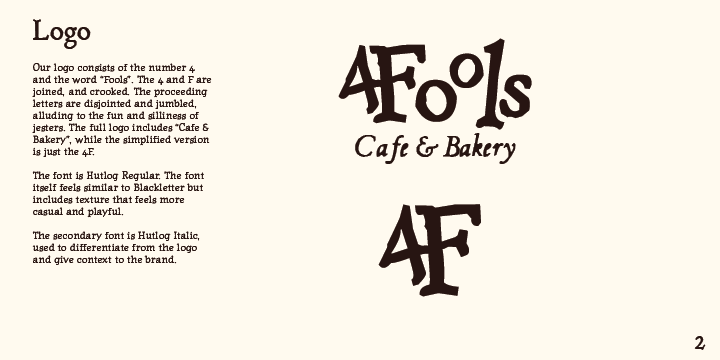
4Fools Logo used for laser-cut sign
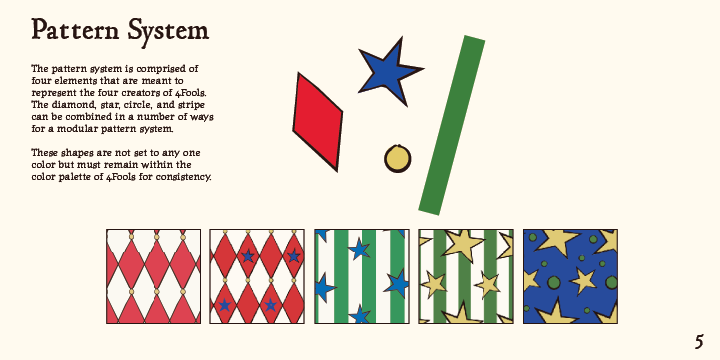
Four shapes that compose various patterns.
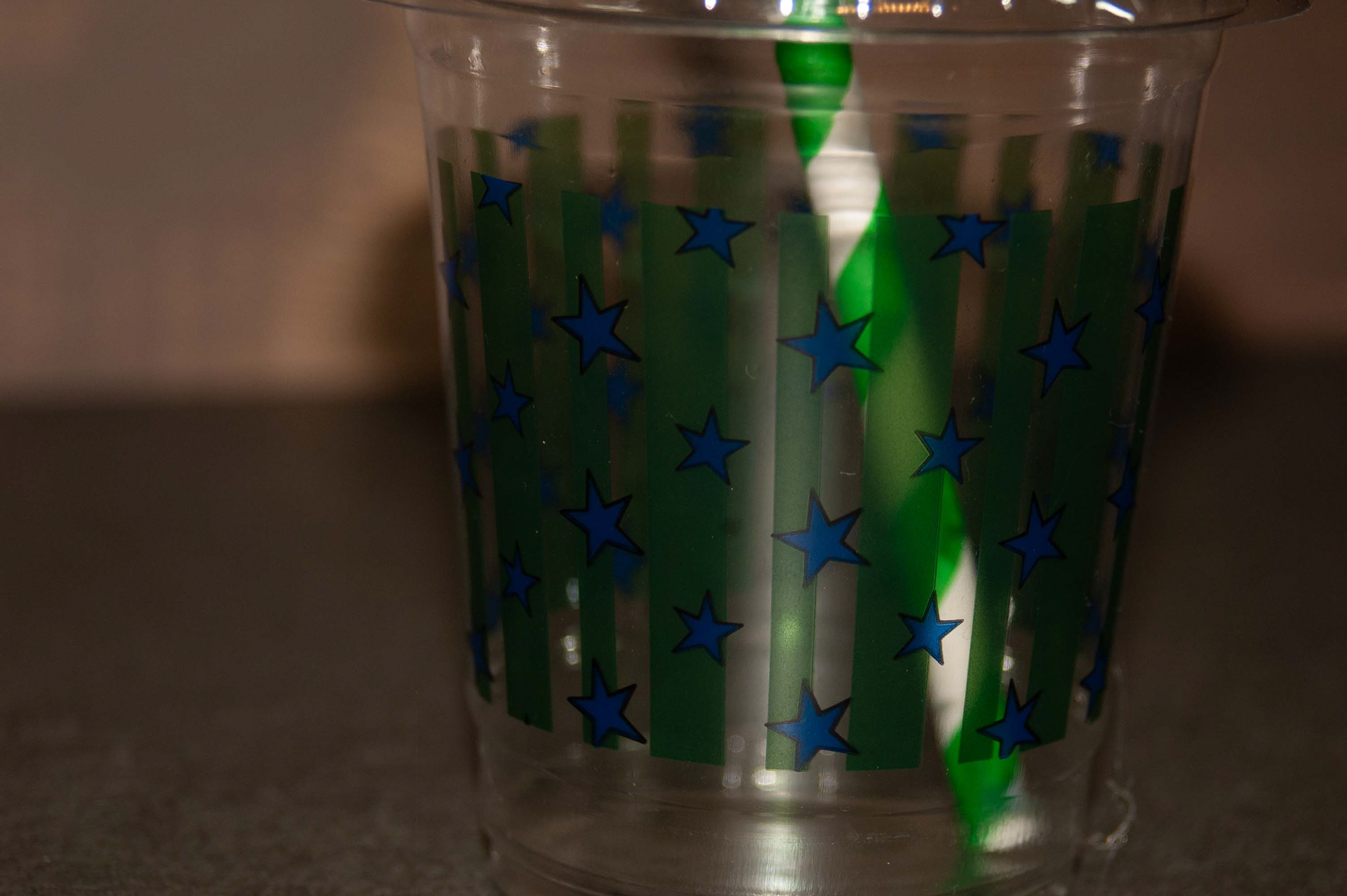
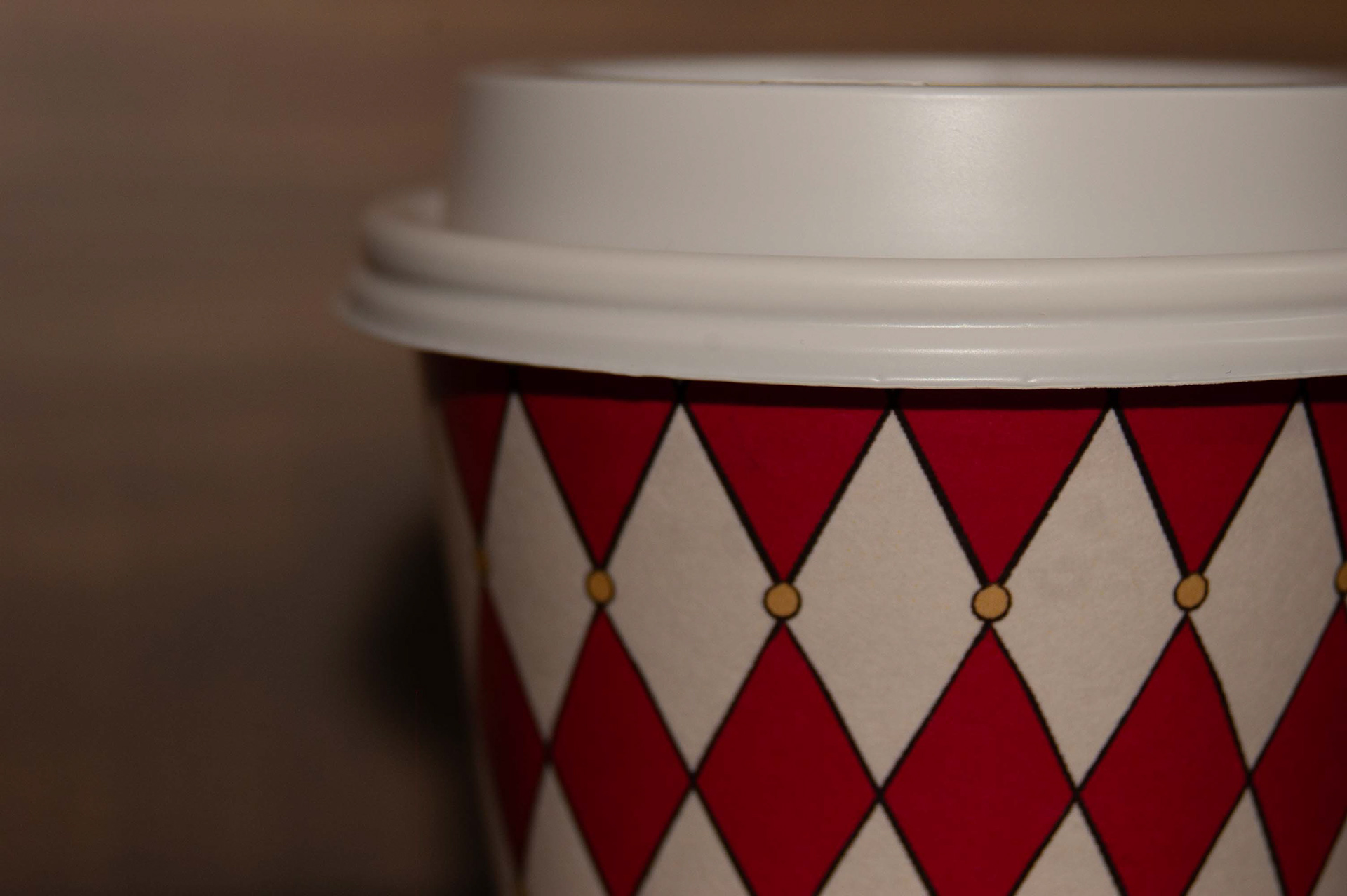
This branding system relies on patterns and a face matrix, rather than relying on a logo. For the patterns, I referenced historical medieval fabric patterns and jester costumes I found at the Renaissance faire. The patterns used throughout the project are a combination of: star, stripe, circle, and diamond. These four shapes can be found in various combinations throughout the deliverables.
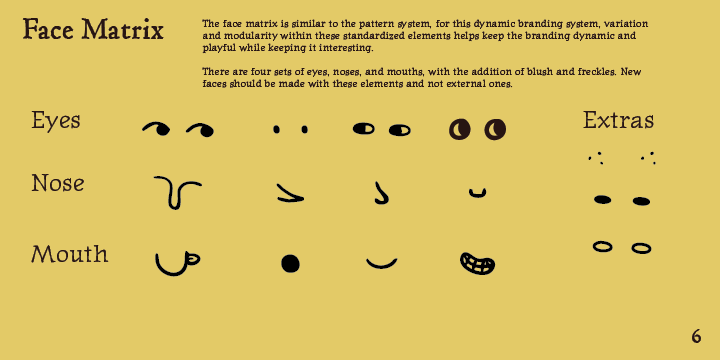
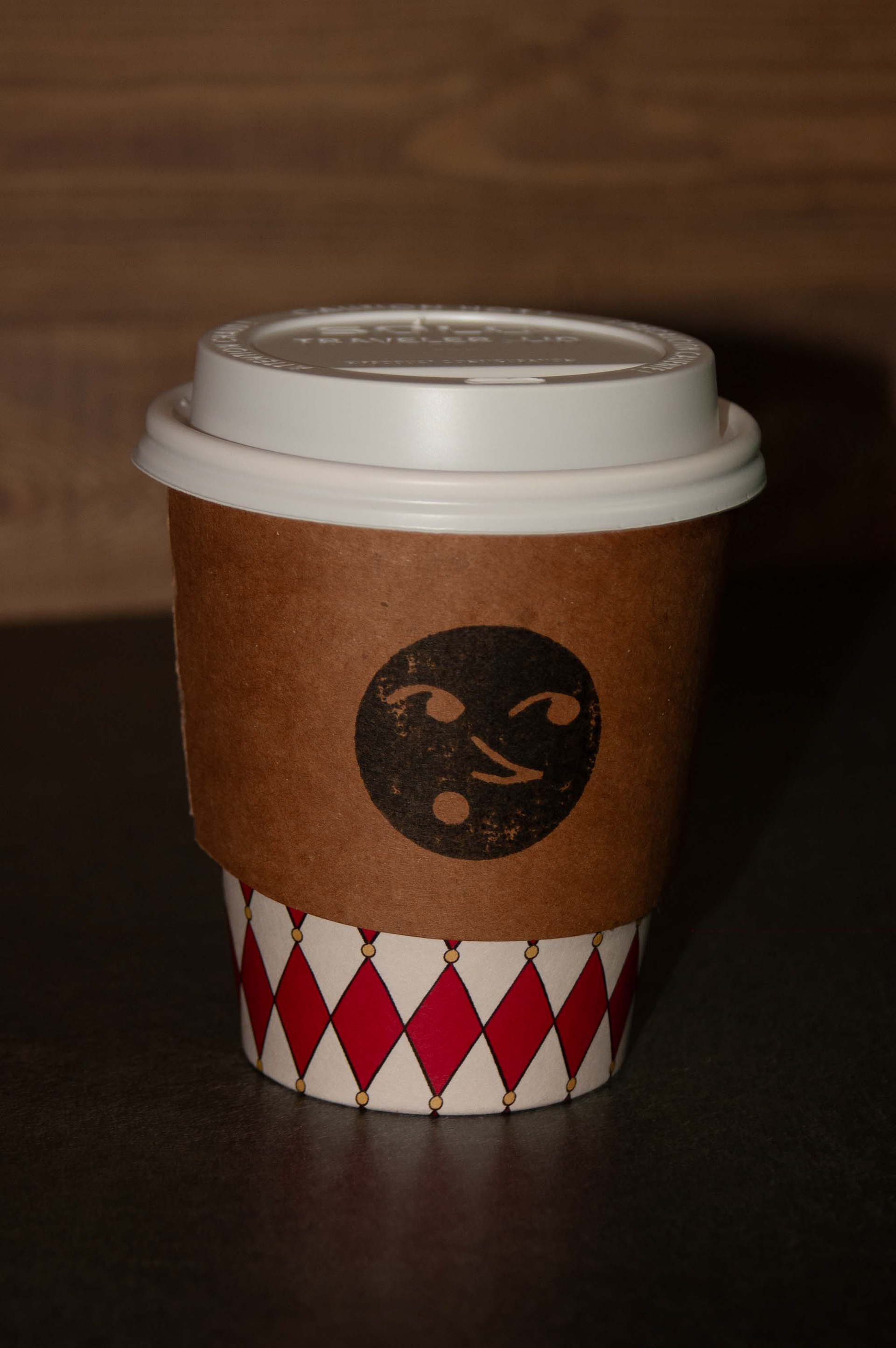
The face matrix is a system that can be found throughout the branding as well. The faces were inspired by the images found in the margins of illuminated manuscripts and are used as a way to include humor and joy. The matrix is comprised of a set of eyes, mouths, noses, and extras like freckles and blush. The faces are used for the stamp card, as stamps for the cup sleeve, and are added to different branded items to push the humor associated with jesters.
Face matrix, used for faces found throughout the project.
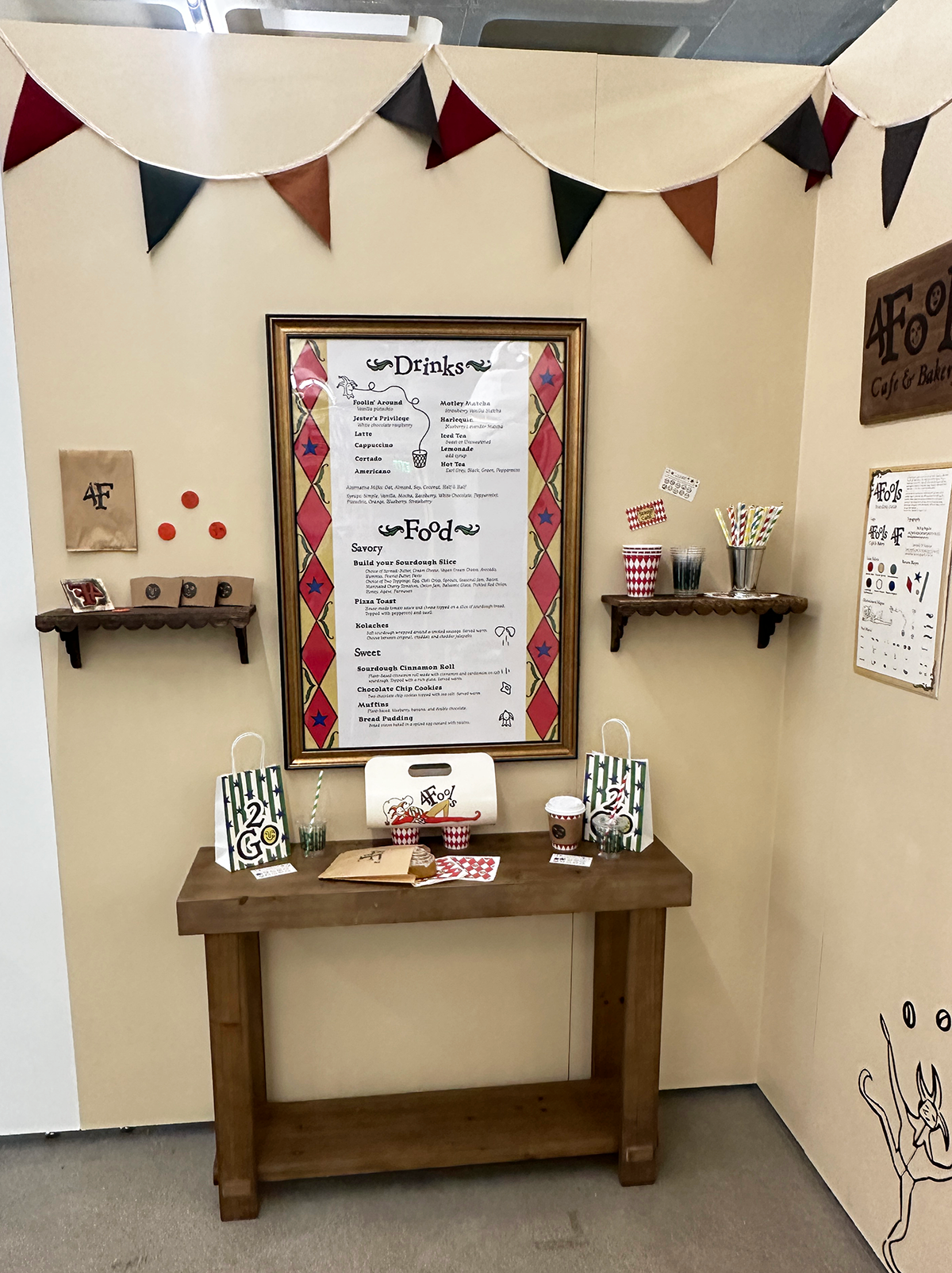
For the exhibit space, I wanted to display the branded items as if they were orders. The menu was hung in the middle of the wall to act as an anchor for the rest of the display. On either side of the menu were two shelves.
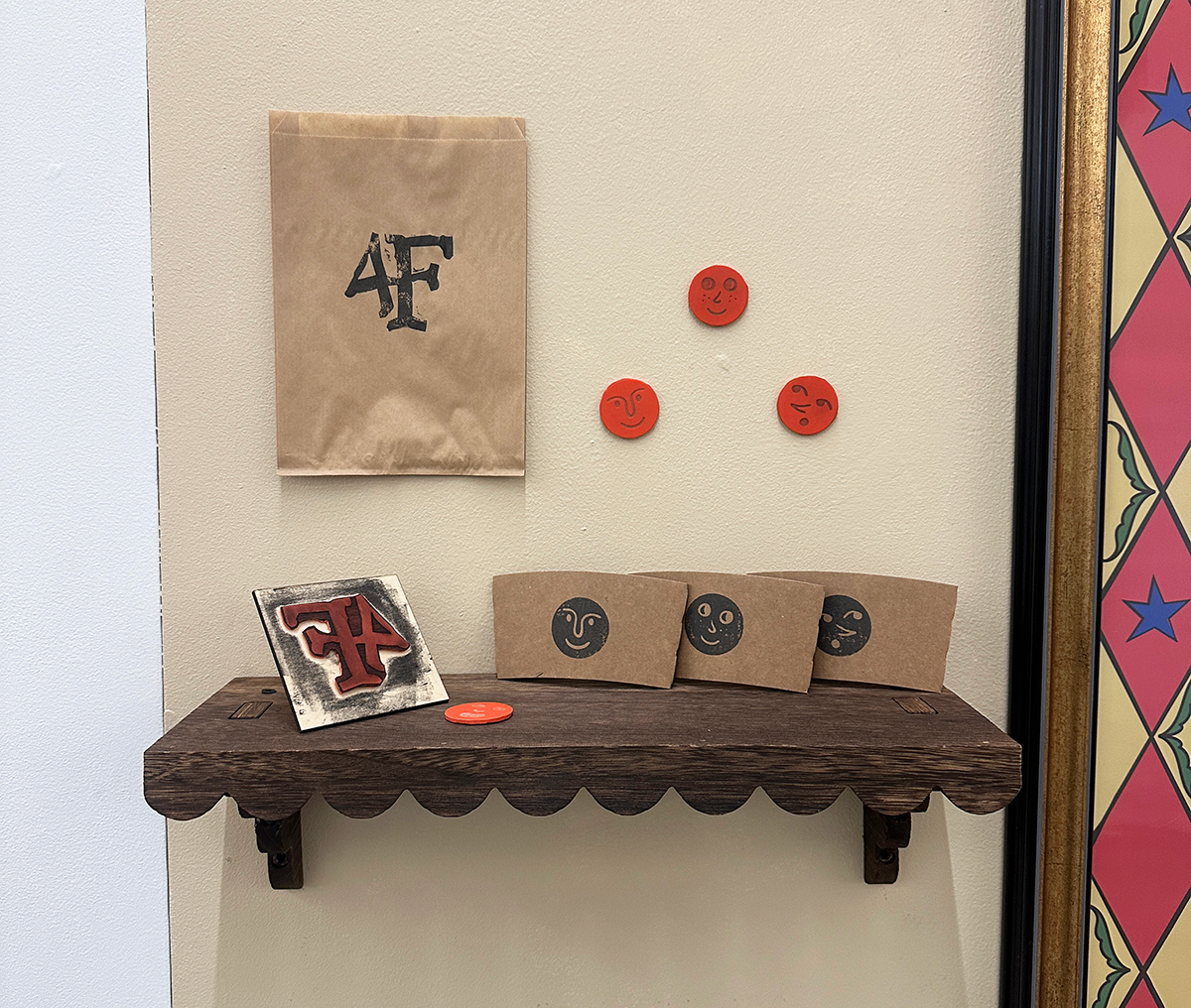
The shelf on the right held rubber stamps. The large rubber stamp with the simplified version of the logo was used for pastry bags. The smaller circle stamps were rubber stamps of faces and were used for the cup sleeves. This allowed viewers to get a glimpse into the production behind a few of the elements.
The left shelf held extra hot and cold cups, two stamp cards with a front and back view, and a silver cup containing colorful paper straws on a napkin. I wanted to simulate a coffee shop with the extra cups and straws, and the front and back views of the stamp card allowed users to see the entire stamp.
Front view of exhibit space.
Right shelf with rubber stamps made at the campus makerspace.
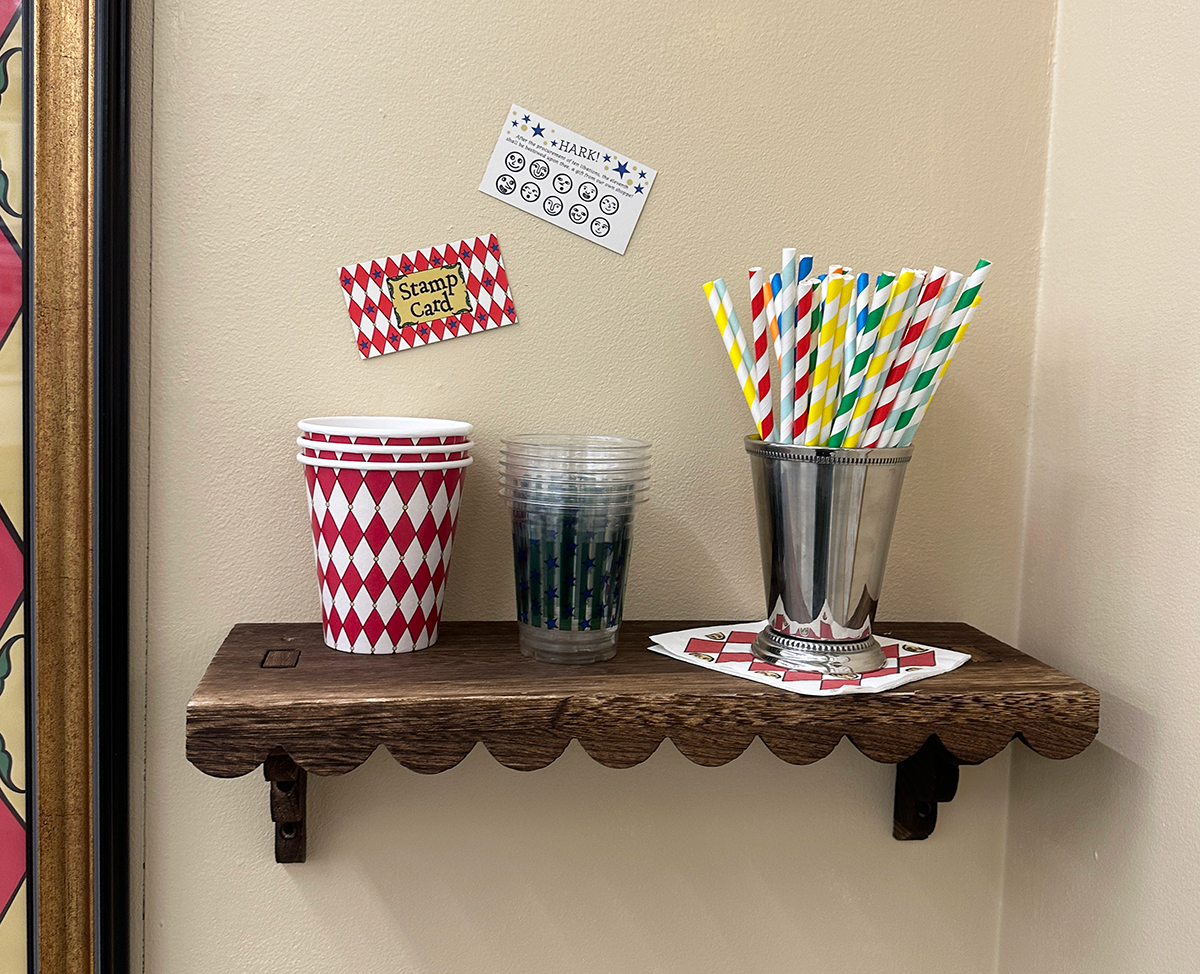
Left shelf used to display extra cups, the front and back of the stamp card, a silver cup that holds paper straws on top of a napkin.
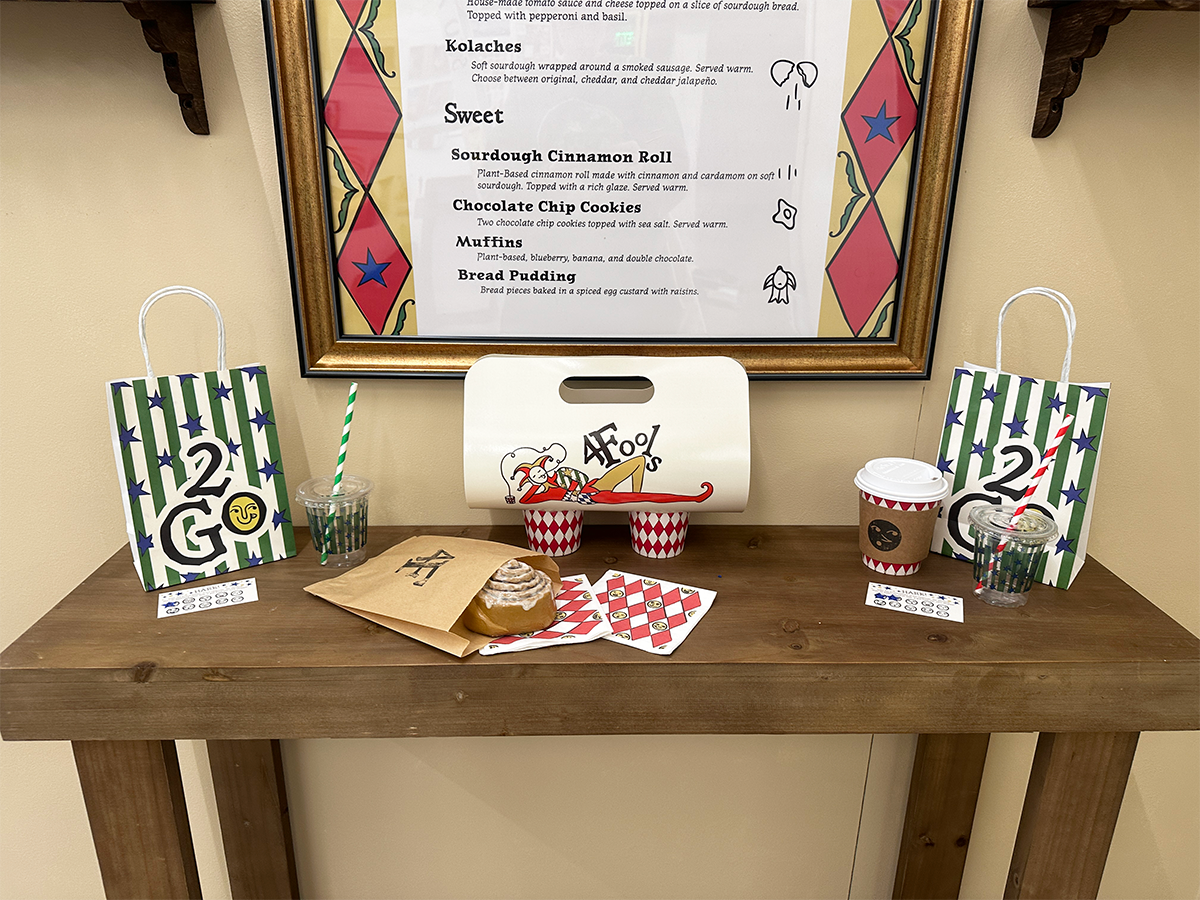
On the table below the menu, I simulated orders ready for pick-up. In the middle, I put the cup carrier, containing two cups, two of the to-go bags on either side with cups, stamp cards, and a pastry bag in the middle with a fake cinnamon roll on a napkin to show the pastry bag "in action". The intention behind my choices was to give the viewers an idea of how these items would look together and a chance for the modularity found throughout the branding to shine.
Top of the table with displayed deliverables.
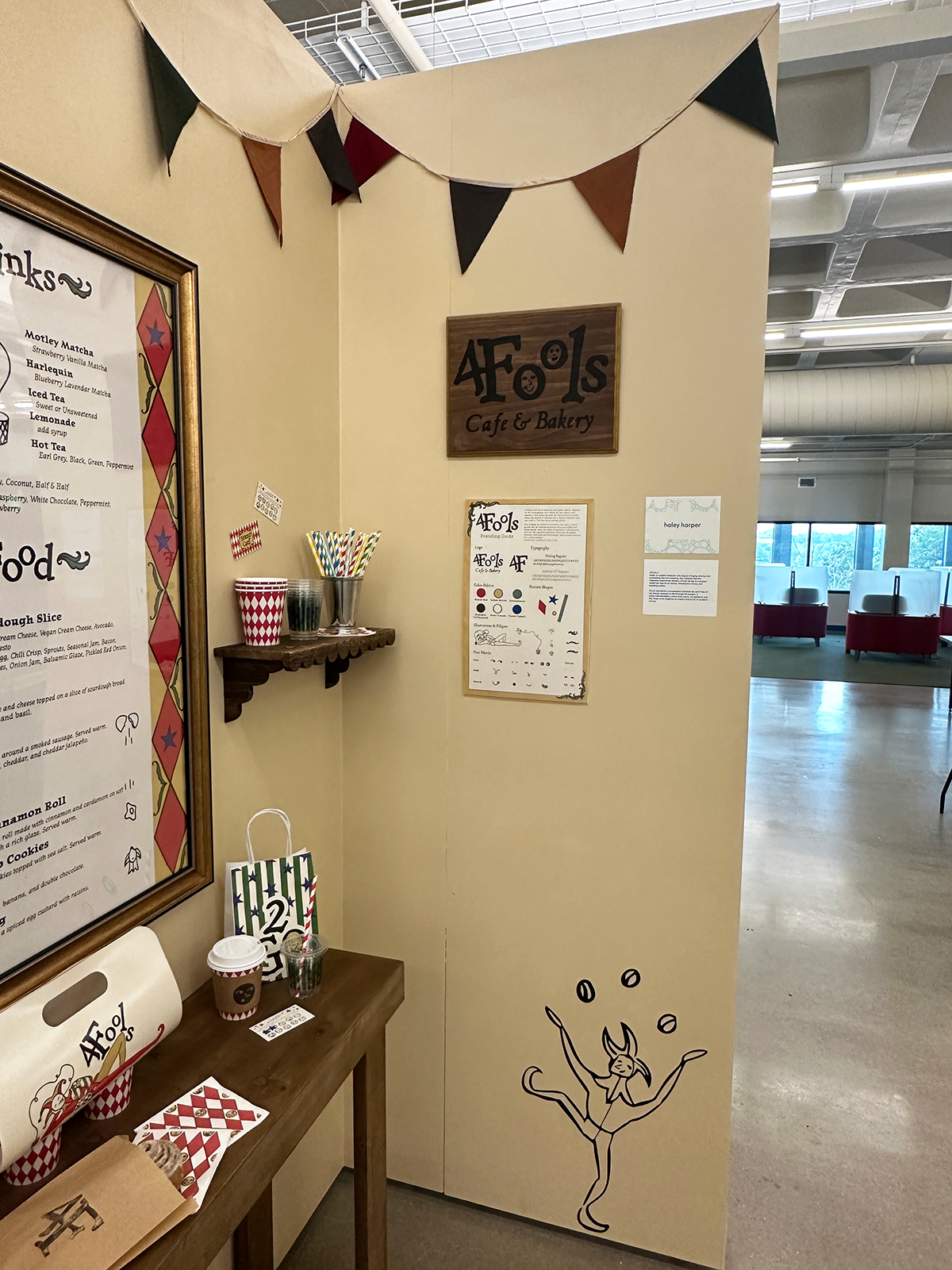
View of shorter wall.
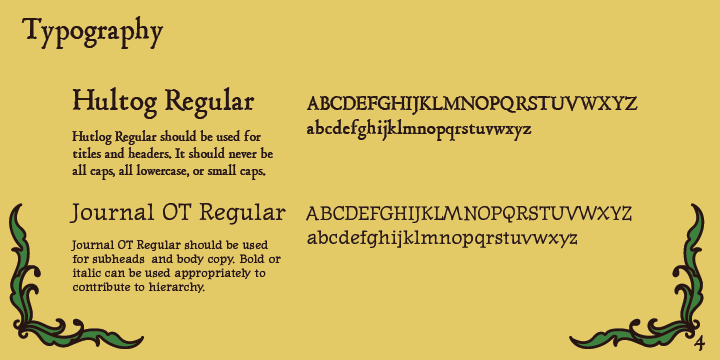
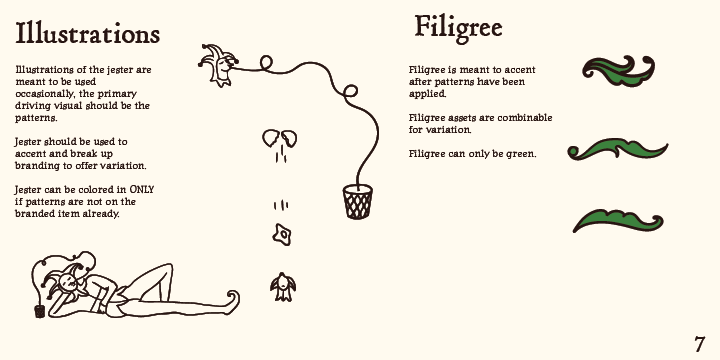
On the short wall perpendicular to the main wall, I included a laser-cut sign, a simple brand guide, and a vinyl-cut jester. The sign was meant to emulate the signs found throughout Renaissance Fairs. The branding guide allowed viewers to see all of the components, and the vinyl-cut jester juggling coffee beans referenced the jester illustrations found on the menu. The final touch of the display was the bunting along the top of the wall.
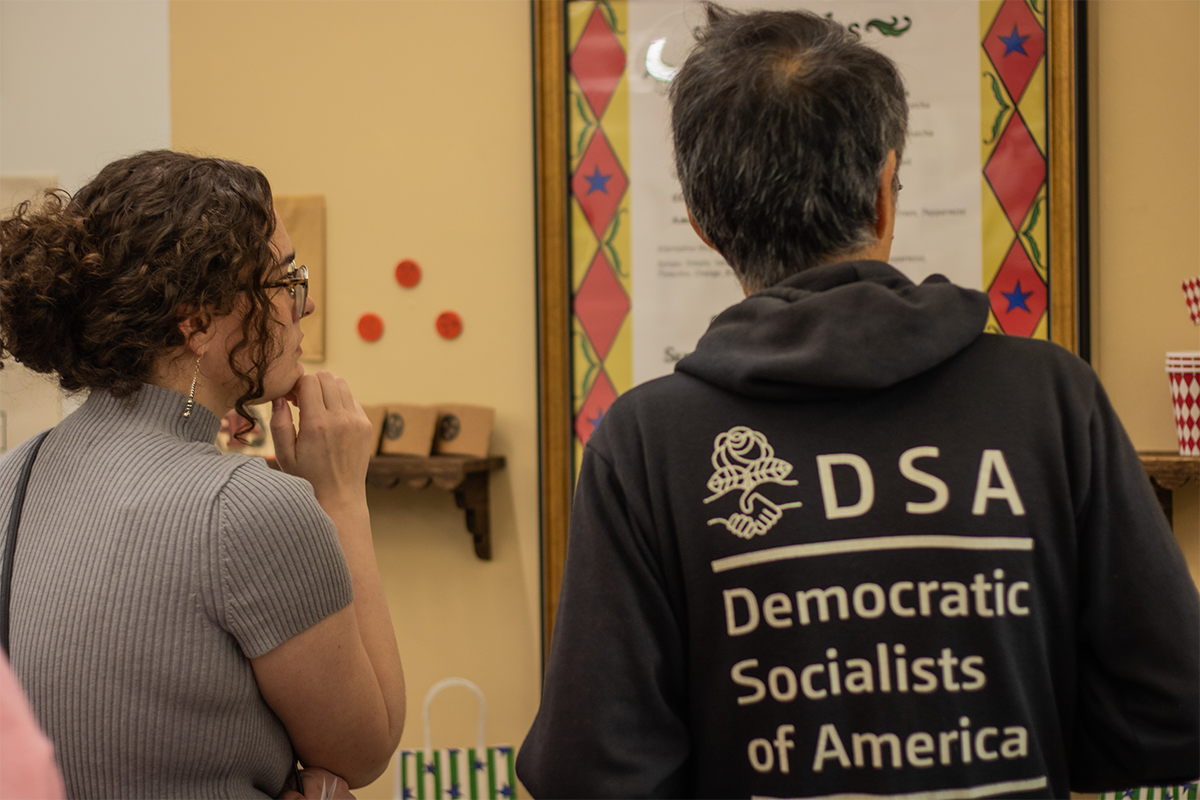
The reception and feedback for 4Fools were very positive. Viewers enjoyed the faces and jesters, and the patterns found throughout. I loved creating this project; it was an opportunity to push myself as a designer and share a part of myself that I'm passionate about.
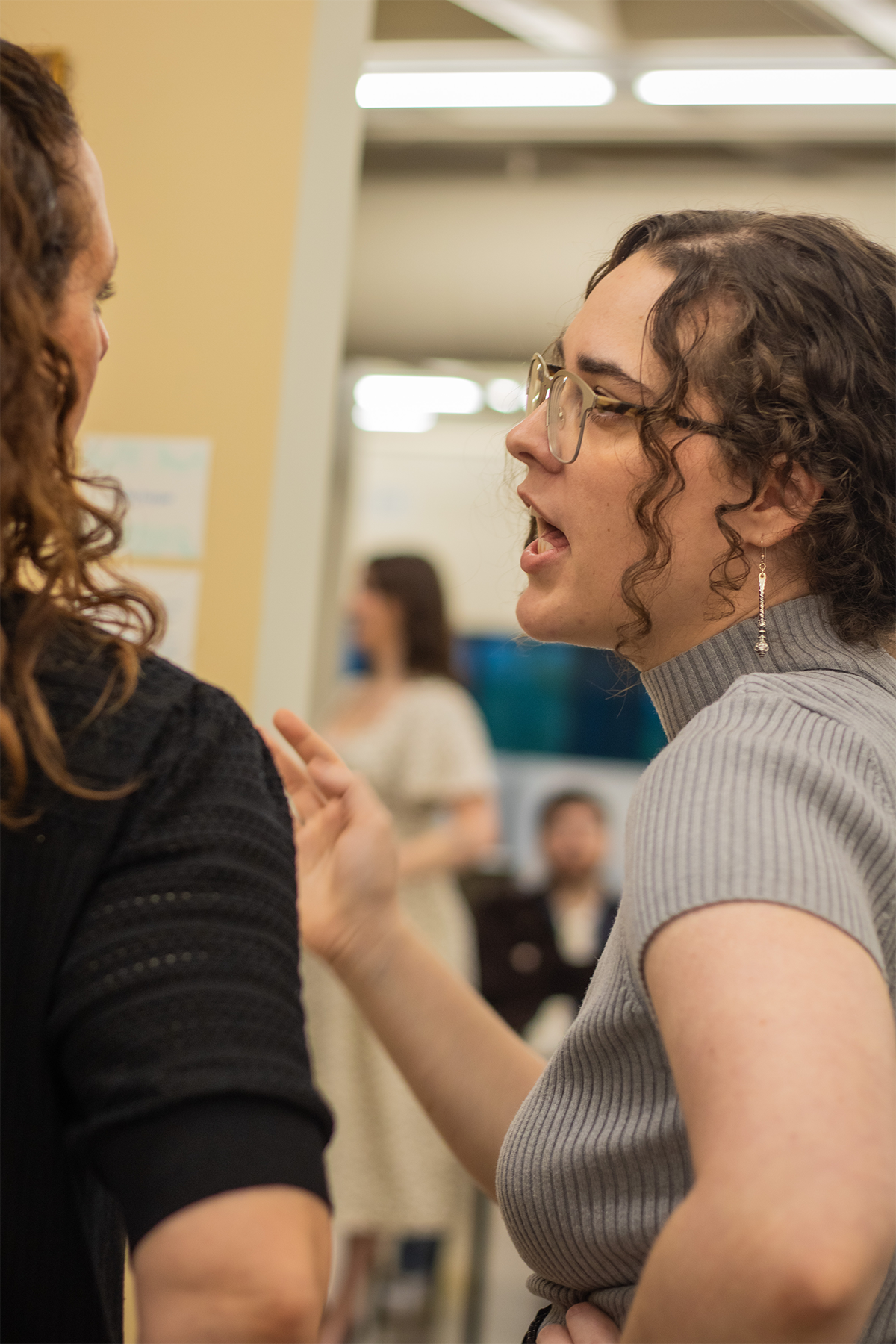
Professor Tuan and I discussing the outcome of the project.